



Human Rights


Our Commitment
As a real estate developer and shopping center operator, JAS Asset Public Company Limited recognizes the importance of respecting and protecting the human rights of all stakeholders including employees, tenants, customers, business partners, and surrounding communities as a fundamental foundation of ethical and sustainable business operations.
However, today’s retail and shopping center business faces increasingly complex human rights challenges, including the protection of labor rights across the supply chain, the prevention of workplace discrimination, and the promotion of equality among all stakeholder groups. Addressing these challenges requires a robust and transparent governance and management system to ensure that the Company’s operations align with human rights principles in all aspects.
To support this commitment, JAS Asset Public Company Limited has established clear human rights policies and guidelines, while integrating technology and innovation into its management practices such as implementing transparent and accessible grievance channels. The Company also fosters collaboration with government agencies, non-governmental organizations (NGOs), and local communities to strengthen labor standards and promote fair business conduct.
Supporting the SDGs Goals

Stakeholders Directly Impacted


Goals and Performance Highlights
Goals

- There must be no significant complaints or human rights violations affecting stakeholders impacted by the Company's business operations
Performance



Management Approach and Value Creation
Issuance of the Human Rights Policy
JAS Asset Public Company Limited plays a key role in formulating the Human Rights Policy of the JAS Asset, in alignment with applicable human rights laws, local and international regulations.
The scope of JAS Asset’s Human Rights Policy encompasses all stakeholders, including all employees within the Company’s operations, subsidiaries, joint ventures, business representatives, and partners — from the Board of Directors, executives, and employees at all levels. This policy serves as a framework for all parties to operate with integrity, honesty, and strong adherence to good corporate governance and ethical principles.
The Company is firmly committed to its social responsibility and to all stakeholders under the principles of good corporate governance and sustainable business practices, ensuring that its operations align with human rights principles and the United Nations Guiding Principles on Business and Human Rights (UNGP).



The policy covers key aspects such as the humane treatment of employees; the prohibition of abuse, violence, sexual harassment, physical or psychological threats, or verbal humiliation; as well as maintaining proper standards of occupational health and safety and providing a positive work environment. The Human Rights Policy also strictly prohibits the Company and its employees from engaging in any form of human rights violations or misconduct toward others — such as the use of illegal migrant labor or child labor.
In the event that any individual or employee becomes aware of a violation of this policy, they may report the misconduct through the Company’s established whistleblowing or complaint channels. The Company will ensure the confidentiality and protection of whistleblowers and handle all cases with fairness, transparency, and impartiality. If any wrongdoing is verified, the Company will take appropriate corrective action and provide fair and suitable remedies to affected parties.
Establish a Channel for Complaints and Whistleblowing

Human Rights Due Diligence
JAS Asset Public Company Limited has strengthened its commitment beyond the establishment of its Human Rights Policy by integrating best practices that emphasize respect for employees and all stakeholders into a comprehensive human rights due diligence process. This process follows the framework of the UN Guiding Principles on Business and Human Rights (UNGP), serving as a key guideline to ensure that the Company operates in alignment with international human rights standards.
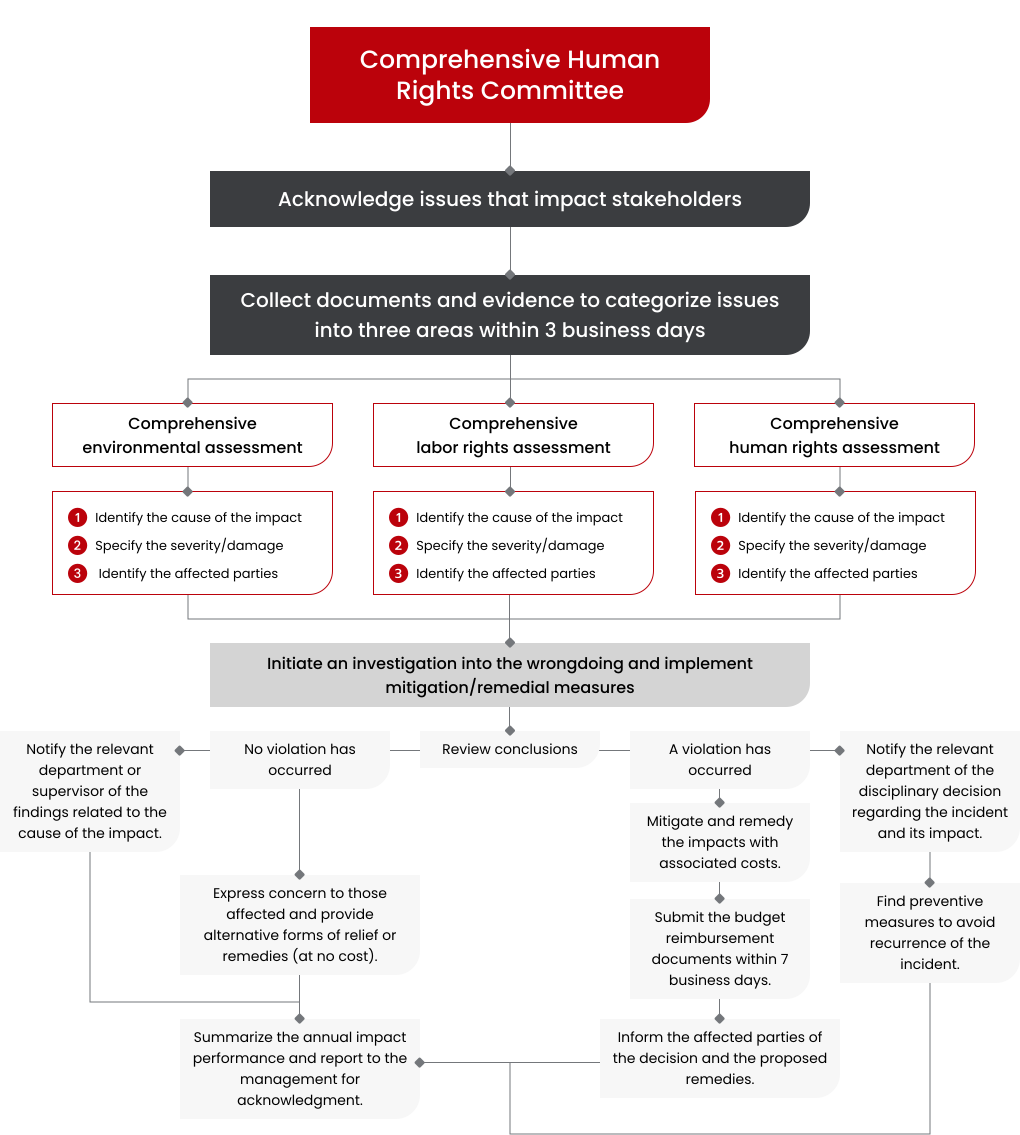
Through this approach, the Company aims to prevent, identify, and address potential or actual human rights impacts that may arise across its entire value chain. The assessment covers incidents, affected stakeholders, and the full spectrum of human rights management procedures, carried out through a systematic and thorough process as outlined in the following steps.
Scope of the Comprehensive Human Rights Management Process

Establishment of the Human Rights Policy

Identification of Issues and Assessment of Potential Impacts from the Company's Activities

Preventive Measures and Mitigation of Potential Negative Impacts

Monitoring, Performance Tracking, and Issue Review

Communication to Stakeholders and the Public

Remediation and Grievance Mechanism
Therefore, the comprehensive human rights due diligence framework can serve as a tool to identify issues that might impact the scope of the company’s operations, potentially causing negative impacts on stakeholders in the future. It also identifies issues that could affect the company’s key partners, serving as a tool to manage the organization’s human rights efforts. This process helps discover areas the company still needs to develop or improve or areas where risks exist, and actions may not have been adequately or fully implemented.
When the company identifies an issue that could negatively impact any group of stakeholders, it will establish preventive measures to minimize or eliminate the impact, ensuring that similar situations do not recur. Additionally, the company will establish a framework for remedying the situation for those affected by the company’s activities, guiding the relevant departments in their actions.
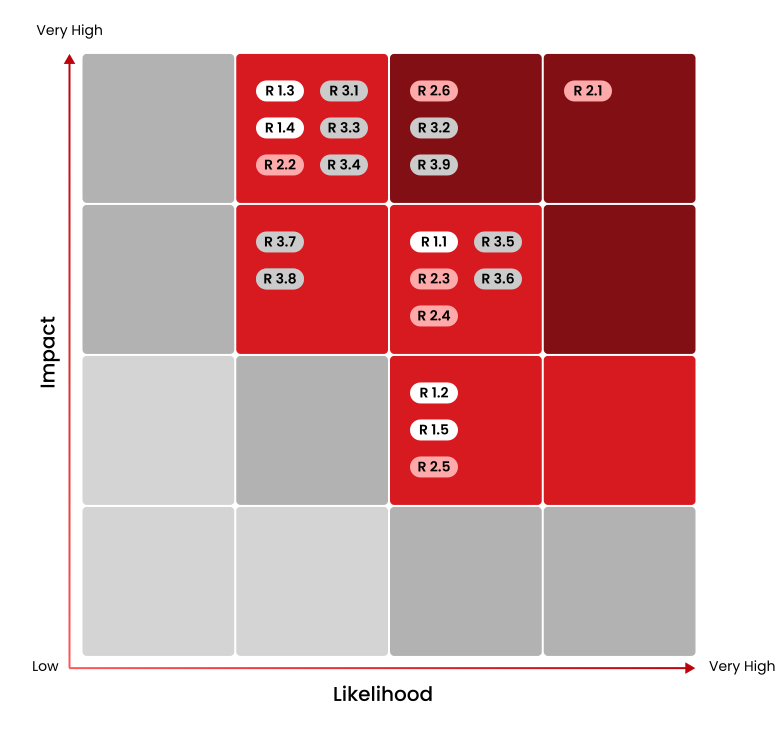
The severity levels of identified risk issues are categorized into four levels as follows


Low Risk (Level 1)
Medium Risk (Level 2)
High Risk (Level 3)
Very High Risk (Level 4)
Risk Assessment from Human Rights Due Diligence (HRDD)
Comprehensive environmental assessment
Comprehensive labor rights assessment
Comprehensive human rights assessment
Remediation / Mitigation Process for Impacts on Comprehensive Human Rights Due Diligence (HRDD)